
I was Scammed! Writers Take Heed!
As a one-time cyber security analyst, I have been aware of the various scams that rot the internet. From tech support scams, lottery scams, Nigerian prince scams, subscription scams, and the ever-present malware, scams have been a thing since the first days of the internet.
Another, rather infamous and foul scam has always been the various phishing scams. A phishing scam is the process of attempting to acquire sensitive information such as usernames, passwords and credit card details by masquerading as a trustworthy entity using bulk email which tries to evade spam filters.
Phishing scams come in various forms, with mine being a variation of the Nigerian prince scam called the Vanity Scam or the Bookclub scam. All authors want their work to be read, and we even want feedback, good or bad, about our work. And this is how the Vanity scam works. It preys on that desire of a writer to hear feedback on their work.
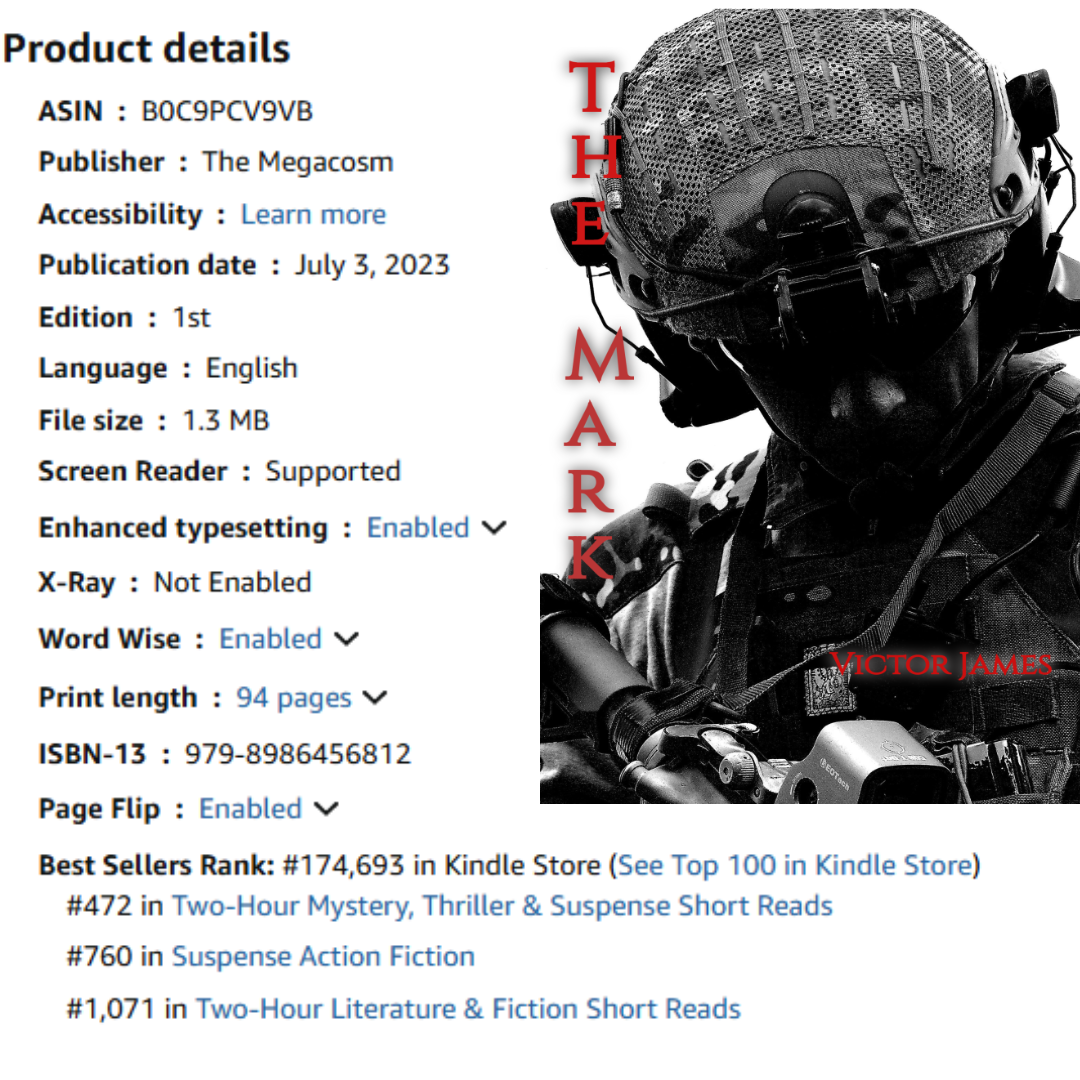
I was recently sent an email from a supposed book club wanting to promote my novella, The mark, for a month and then host a virtual meeting where I discuss the work with readers. The Mark has been selling very well lately, finally breaking triple digits for two-hour mysteries, so I immediately perked up.
The email was long, eloquent, and effusive with praise. It knew peripheral details about The Mark, using such keywords like military, and obsession to give the impression it had been read.
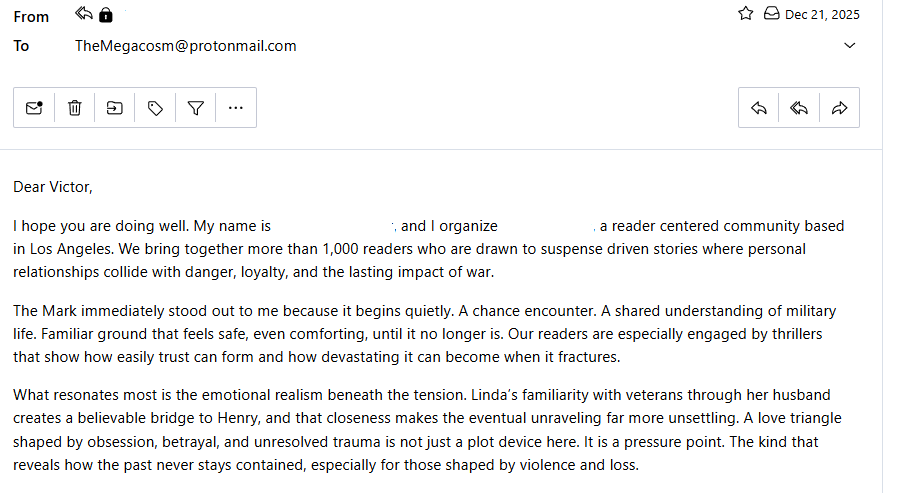
All identifiable information that was use has been erased since it’s not the bookclub’s fault.
And immediately I thought it was written by AI.
Yet, I had never heard of a writer being a target of anything in regards to scams. I did my due diligence by not clicking on the provided links but searching for the name and bookclub used in the email in Luxxle and both were real. But my instincts still said scam, so I wrote back a simple email saying thanks, and what was the purpose of their email.
The bookclcub email reply was again, very long and flowery, using much of what I had responded with to heap praise on me as a writer. Their plan included the fact that I, of course, was to pay nothing, and all I had to do was appear at their roundtable to go in-depth about my story with the readers.
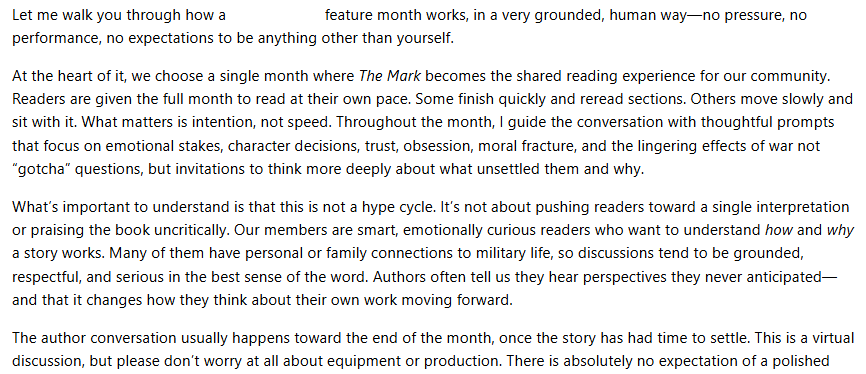
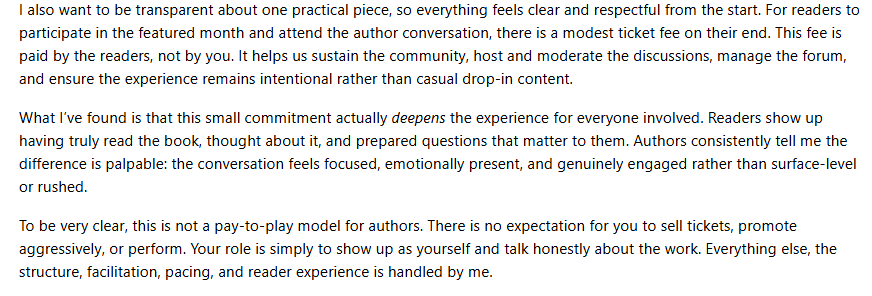
As a former cybersecurity analyst, I knew I should have stopped. I knew that further contact with the scammers only invited more danger and I do not recommend doing so, but I was curious how far they were willing to go, so I wrote a third email asking for a timeline. And this is where the phishers believe they have a phish on the hook and attempted to reel it in. Their reply now offered paid tiers where I pay the bookclub and their members for their level of engagement.
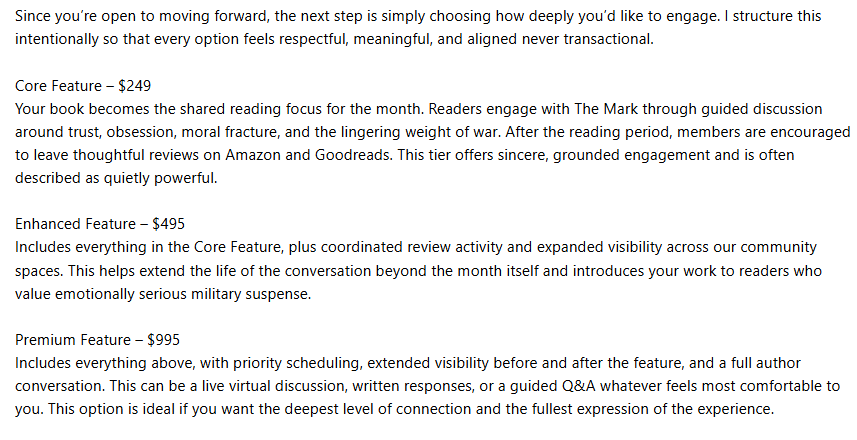
Now I had confirmation that I was indeed a victim of a scam. I then returned to the bookclub website to inform them that their club was being used as a scam against writers and noticed that they had appended to their site that any communication for solicitation did not originate from them.
Further research brought me to the website Writer Beware that detailed an uptick in overseas phishing scams targeting vulnerable writers who long to get their work read and appreciated. Their article also detailed several tell-tell signs of a scam that originally raised my hackles.
The title of the email was bizarre and strange.
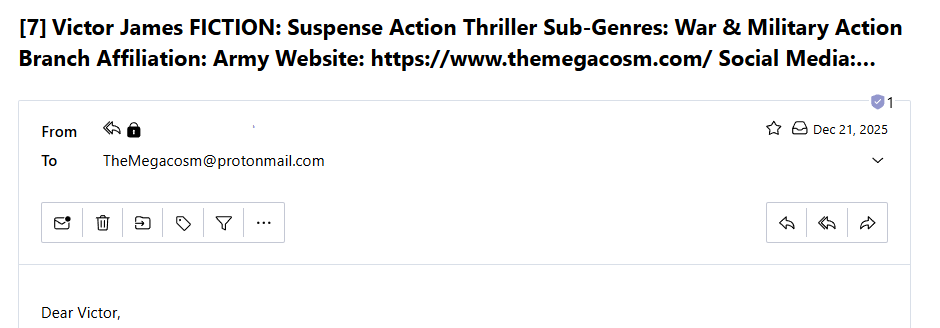
The email was full of flowery praise that no real person would take the time to write, even for a author that loved.
Then there was the offer of pay-to- play. Had I gone forward, Writer Beware details the various payment options the scammers employ, which include paypal, bank wire transfers, and even Upwork contracts to make the author feel the scam is legitimate. There is more to the scam and I highly recommend reading the Writer Beware article as the scam can vary.
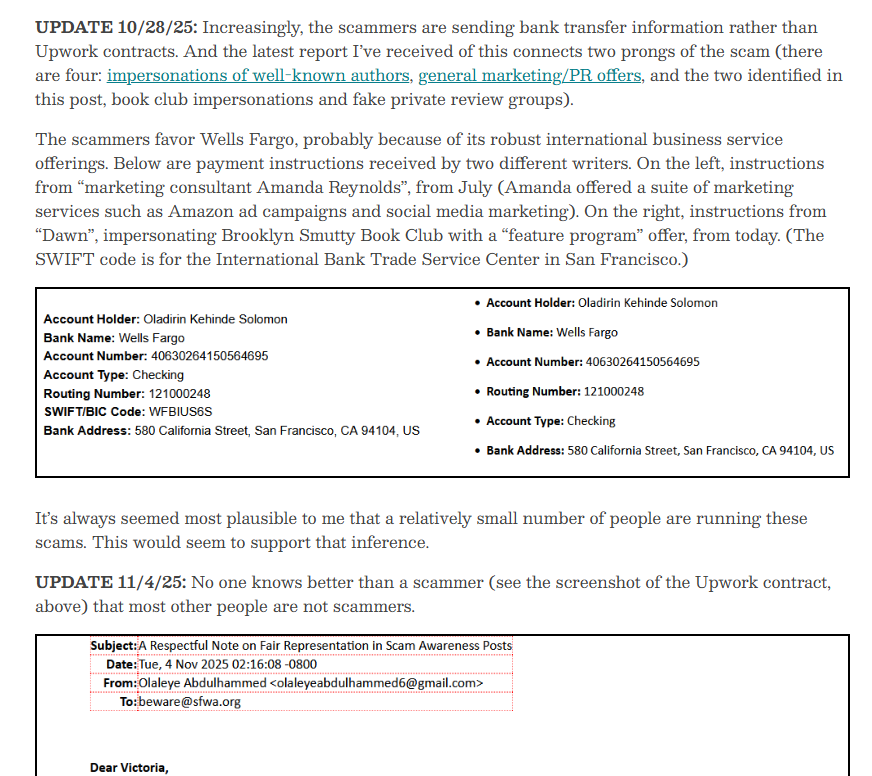
Image from Writer Beware Article
As for my personal scammers, after I broke contact I received last-ditch emails from them. First was another long email trying to reassure trust and offer a lower tier payment option.
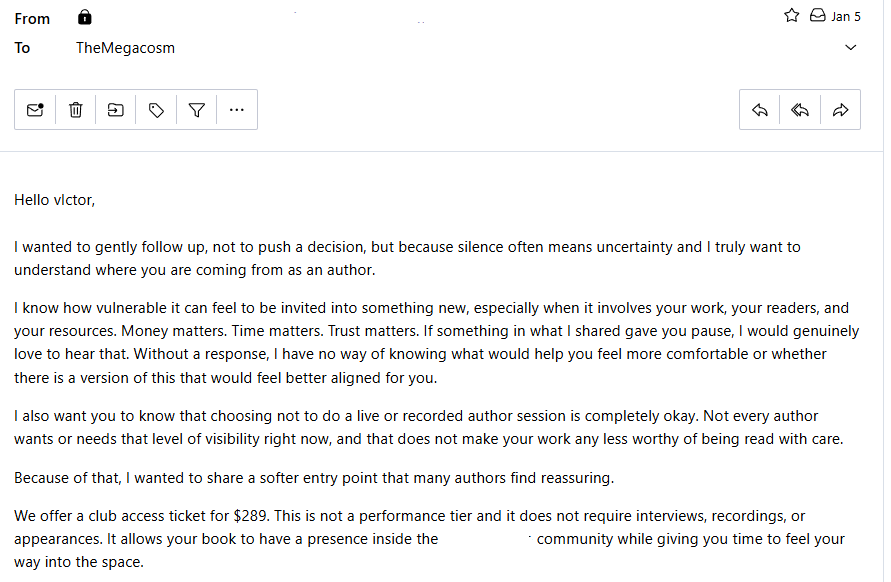
When that didn’t work they tried open communication. Gone was the flowery language and praise that was replaced by a simple offer to chat about any issues I may have.
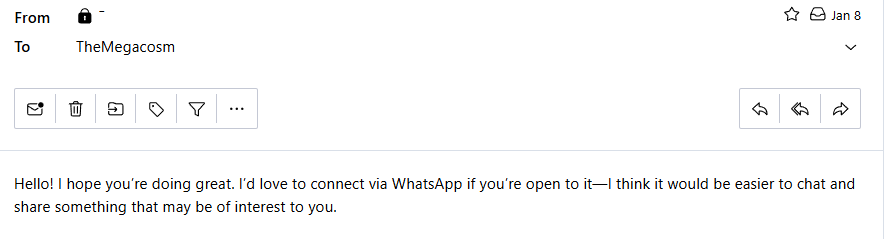
Final email
If you’re a writer, even a new one like me, understand that you are not immune from people who will take advantage of the pride you have in your work and your desire to have it read. Stay vigilant and never accept an offer from a stranger. As they say, if it sounds too good to be true, it usually is.
God Bless and stay safe out there!
Writers Beware Article: Return of the Nigerian Prince Redux: Beware Book Club and Book Review Scams